A Biblical Pattern
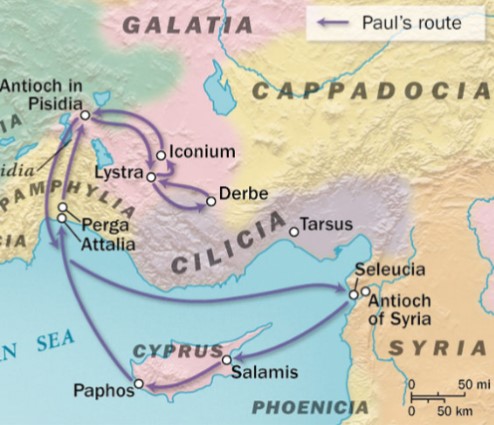
In Acts 14, Paul and Barnabas, after completing their first missionary journey through the cities of Lystra, Iconium and Antioch in Pisidia, returned to those cities:
“Strengthening the souls of the disciples, encouraging them to continue in the faith, and saying that through many tribulations we must enter the kingdom of God.” (Acts 14:22)
Teach them Sound Doctrine
Paul and Barnabas recognised unlike some today the vital task of not only winning converts and getting professions of faith but also of making sure the work of establishing and strengthening believers in the faith is done.
The great commision is clear, the imperative in the text is on “make disciples (Matt 28:18-20).” Paul and Barnabas on their return to those places where people had professed faith in Christ, encouraged and taught the people what it meant to be authentic disciples of Christ.
On this occasion, they taught the people the reality of future suffering for Christ – the need for disciples to have a willingness to embrace persecution and take up their cross for the sake of the kingdom. An example that Paul and Barnabas had set when they came ot the region with the Gospel. This Gospel truth was also as part of those things Jesus himself had told his disciples to “teach others to obey” in the great commision.
For the early church suffering for the name of Christ was Christianity 101, but for many today discipleship and actual obedience to the commands of Christ are optional extras reserved for super Christians not necessary elements of our faith, so long as we have made a profession of faith at some point. But Paul and Barnabas recognised the necessity of teaching truths like these as well as other important doctrines that are central to our progress in the faith to grow up into him who is the head “to the measure of the stature of the fullness of Christ (Eph 4:13).”
It was not enough that these people had professed faith or even been baptised, they must be prepared to go through “tribulations to enter the kingdom of God.” Paul and Barnabas had experienced the realities of suffering and difficulty in Christian life themselves and were not afraid to share these hard truths with others.
Making sure that people understand this and other fundamental doctrines necessary for them to be established in the faith is a priority for missionaries and mission agencies like Engage. For some though the goal to “rapidly plant churches” and to “rapidly appoint leaders” so they can “rapidly” make more leaders and more disciples overshadows the teaching of sound doctrine and establishing churches with a sound ecclesiology. The metric of speed, due to the need to “finish the task” can bypass and even dilute the need for people to become mature disciples of Christ and for churches to be healthy with a sound ecclesiology.
Appoint Biblical Elders
But not only did Paul and Barnabas recognise the importance of establishing them in the faith via sound doctrine, they also understood the necessity of placing sound biblical Elders to over the churches, we read Acts 14:23:
And when they had appointed elders for them in every church, with prayer and fasting they committed them to the Lord in whom they had believed
Acts 14:23
Paul and Barnabas were serving the Lord in the role of pioneer church planters – they went from place to place seeking to make the name of Christ known where it had never been heard and planting new churches. They were not called like others to faithfully shepherd the flock in a local church congregation over many years – that is the role of local elders. Thus they determined to appoint from among the churches faithful Elders to oversee the flock. They took this responsibility very seriously by setting apart time for prayer and fasting before making their decision.
This contrasts with strategies advocated for in a lot of contemporary church planting literature that proposes the rapid appointment of leaders whether or not they meet the biblical qualifications of Elders. This is done because of the need to reach the unreached as fast as we can, and in the name of not “strangling the work of God” by being to “rigid about ecclesiological structure” or “right doctrine.” But we must ask: What is the quality of the churches and believers in those churches? The quality of churches and the people who attend them will be only equal to or less than the quality of those who lead them.
The task to “reach the unreached” as well as to “teach the nations to obey” broadly speaking seems to have been the pattern of the Apostle Paul. He sought out unreached places to make the Gospel and the name of Christ known where it had not been known. As he says in Romans 15:
“and thus I make it my ambition to preach the gospel, not where Christ has already been named, lest I build on someone else’s foundation” (Rom 15:20)
When he went to these unreached places he would boldly proclaim the Gospel and people would profess faith, he would then teach that group group, appoint faithful Elders over them and move on to a new unreached location. For some church planting ministries that is where the story ends, and they seek to do this as rapidly as possible. But this was not the end for Paul, he would follow up by return visits to strengthen them. Either by doing this himself or by sending his representatives or letters to strengthen them in the faith with the goal of maturity. Paul’s goal was not speed, but maturity both for the churches and for individuals (Col 1:28). In describing his ministry he said:
Him we proclaim, warning everyone and teaching everyone with all wisdom, that we may present everyone mature in Christ. For this I toil, struggling with all his energy that he powerfully works within me
Col 1:28-29
A Season of Strengthening
Over the past several years, Engage International church planters have sought out places where the Gospel had not reached. They have preached the Gospel in those places and many have professed faith, they have gathered those new believers into groups and are teaching them how to be authentic disciples of Christ. Through their work over 20 churches have been established but the work is far from over in those areas.
Through my time here in Nepal over the last year and my visiting of the churches, it has become apparent that there is a need to work closer with our church planters, to strengthen the believers in their understanding of the fundamentals of the faith. For many believers in Nepal, even in churches where the Gospel is preached their understanding of the Christian life is limited, they don’t know sound doctrine, their faith is the equivalent of Western nominalism without the benefit of access to resources like those we have in the West. Their understanding of how to live as authentic disciples of Christ, and how to preach the pure Gospel in the midst of a pagan and idolatrous culture requires far more work. Part of the solution is to appoint sound Elders and leaders to oversee the churches, but many of the Elders and leaders in Nepal themselves struggle with the same problems of Gospel illiteracy, ignorance of sound doctrine, lack of training and minimal real life examples of how to follow Jesus.
At Engage, we not only want to see churches established in unreached places but see individuals and churches mature into healthy followers of Jesus with a sound ecclesiology, with sound leaders so that they to can do the work of discipleship and church planting among the unreached themselves for generations to come.
Over the next season, we plan to serve our church planters by providing them with better teaching and training resources as well as patterns of leadership and accountability which they can use to raise up and appoint sound Elders and leaders in the churches.
Engage Intern Program and Resources
To accomplish this goal, in the second half of 2021 we will begin an additional one year Intern program that all of our church planters and students will be required to attend. Some of the key resources for our program are two books that are currently being translated into Nepali.

The first book is “What is the Gospel? – And How Can I explain it to Someone.” This book written by Engage President Dr Peter Law, outlines the Biblical Gospel found in central doctrines like Propitiation and Penal Substitutionary Atonement. The book highlights the importance of Repentance from sin and Faith alone in Christ as the only grounds for our justification. It also has a section that gives examples and illustrations of how to effectively present these crucial truths of the Gospel to others.
The importance of a book like this for Nepal cannot be underestimated. Many in Nepal do not understand these doctrines and for many a Gospel of healing and prosperity is all they have been exposed to. Since a gospel of healing and prosperity only is what they have heard it is this they share with others. It is imperative that the church of Nepal understand the biblical Gospel and can effectively share it with others in order to combat the false Gospels of cults, extreme charismatism and prosperity preachers that are filling the land.
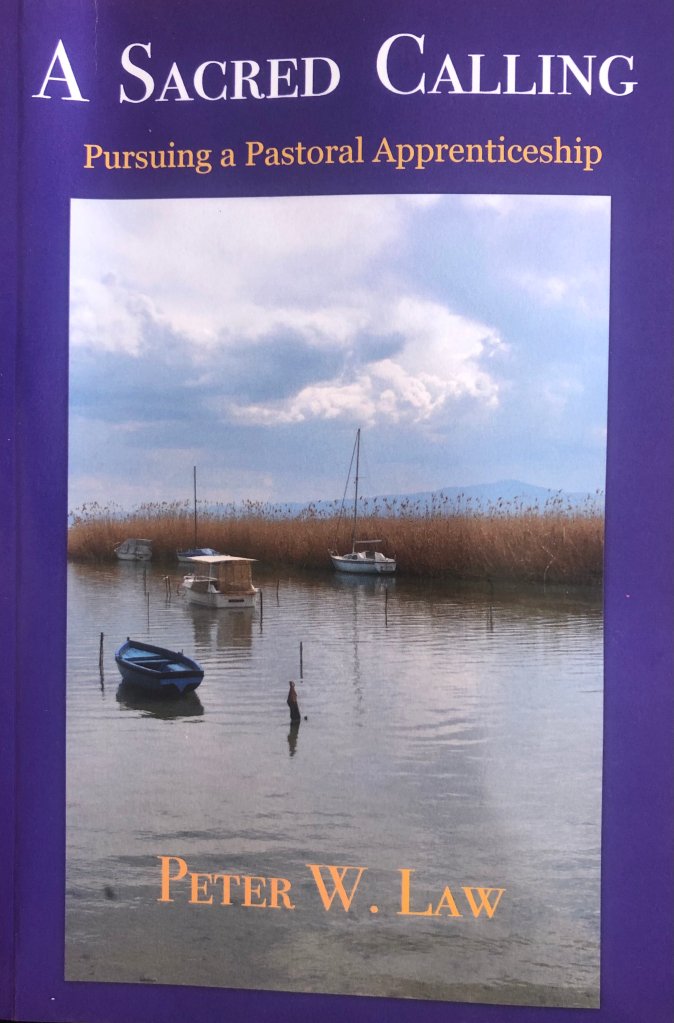
The second book: “A Sacred Calling – Pursuing a Pastoral Apprenticeship” also written by Dr Law – is a larger book with three main sections: (1) The Christian Leader’s Required Mission; (2) The Christian Leader’s Responsibilities; (3) and, The Christian Leader’s Relationships. The book has chapters highlighting what it means to be “called to the ministry,” which is explained as “a Sacred” not secular calling; the “Message and Mission” of the Christian worker, “Christian Leadership” as opposed to corporate patterns, “Discipleship and Mentoring,” as well as chapters on “Loving God, Family, Church and World.” It is a very useful book that covers the basics of what every church leader would need to know to be faithful to the “Sacred Calling” of the ministry.
These two books as well as others will form the backbone of this third year internship program. This is just one of many initiatives we are taking this year to strengthen the work already begun. In my next post I will discuss further ways we seek to strengthen the churches.
It has been correctly stated that churches rise or fall with their leadership, the churches of Nepal in order to become healthy mature churches need sound leadership, those who know what they believe, live it out and can faithfully impart it to others. Without this the phenomenal growth Nepal has seen over the last 50 years will fail as cults and false teachers will lead astray the people so as to create in Nepal a false Christianity that bears no resemblance to the scriptures. In many ways this has already happened but may God establish his people in Nepal for his glory and use the work of Engage to contribute to that.
Thank you for your Support
 THE INSIGNIFICANT CHRISTIAN